The core folder every lender asks for
Identity comes first: a valid Ontario driver's licence, ideally with your current address. If the address is out of date, add a recent utility bill, phone bill or lease in your name. Lenders compare these details against your credit file, and a mismatch is one of the most common reasons an application stalls.
Proof of income is the second pillar. Salaried and hourly workers usually need their two most recent pay stubs; some lenders also ask for a letter of employment showing your start date and position. If you receive pension, disability or child benefit income, bring the statements that show the monthly amount you rely on.
Banking details round out the basics. A void cheque or a pre-authorized debit form lets the lender set up payments, and a few months of bank statements can support a file where the score alone looks weak. Statements that show steady deposits and few overdrafts speak well for you in the lender's eyes.
Finally, have the name of an insurance broker or company ready. Ontario coverage comes from private insurers, and you will need a policy on the specific car before you drive it home, so knowing who you will call saves a day at the end. Ask for a quote on the exact model you plan to buy.
Extra paperwork for your situation
Self-employed? Pay stubs do not exist for you, so lenders look instead at recent bank statements and your Notices of Assessment from the Canada Revenue Agency. Bring at least the last two years if you have them, plus business registration papers. The aim is to show income that is steady, not just one strong month.
New to Canada, or never borrowed? Without a credit score, lenders weigh income, employment and residency. A work permit or permanent resident card, an employment letter and a lease help build that picture. A larger down payment or a co-signer with established credit can widen the choice of lenders willing to say yes.
Rebuilding after a bankruptcy or consumer proposal? Keep your discharge certificate or certificate of full performance on hand. A first bankruptcy usually remains on your Equifax report for 6 years after discharge, and a proposal for 3 years after you finish it, but specialist lenders can approve you sooner, often with money down.
Coming back from missed payments? A short written explanation of what happened, such as a job loss or illness, along with proof of your current income, can help a lender read your file in context rather than on the score alone. Keep it brief, factual and signed, and attach any documents that back it up.
Paperwork that protects you after approval
Before signing, check the dealer's registration with OMVIC (Ontario Motor Vehicle Industry Council) and note the registration details in your folder. If something goes wrong after the sale, the regulator is where you turn, and having the paperwork ready makes a complaint far easier to file. Registration can be confirmed online in a few minutes.
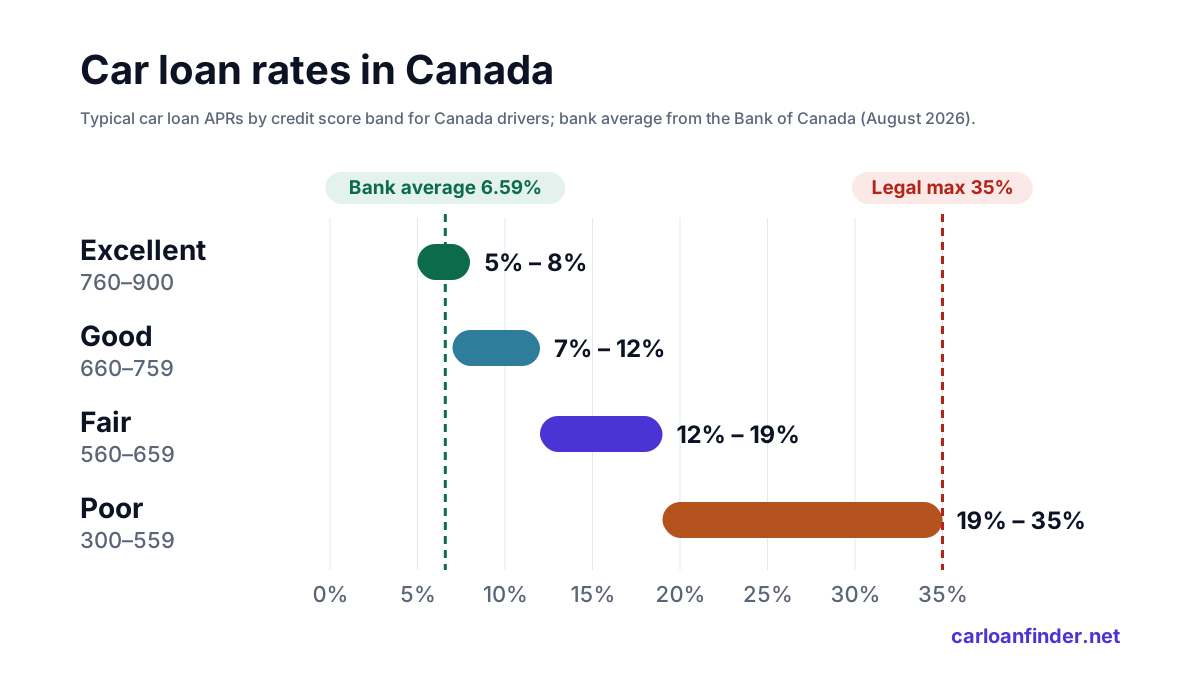
Read the contract for the rate, term and total cost of borrowing. On a poor-credit rate of 27.00%, $25,000 over 48 months costs about $857 a month, and over 84 months about $665. The lower payment is tempting, but you pay interest for three extra years, so pick the shortest term your budget can handle.
Keep the signed contract, the bill of sale, the payment schedule and your proof of insurance together. Most lenders report on-time payments to the credit bureaus, so check your credit report a few months in to confirm the loan shows up correctly and that each payment is recorded, and dispute any error you spot.
Whether you live in SW Argyle, Hamilton Road, Stoneybrook, Oakridge or another part of the city, the lender will want your current address to match your documents. London takes in 17 postal areas, from N5V, N5W and N5X through N6P, so double-check the postal code on your licence and bills before you upload them. If you shop beyond the city, Dorchester is about 14 km away, Komoka and Delaware about 17 km, and Thamesford about 21 km. Toronto, Ontario's largest city, is about 169 km away.
Questions about this topic
What documents do I need for a car loan in London, Ontario?
Plan on a driver's licence, proof of address, recent pay stubs and a void cheque. Lenders that work with lower scores may also ask for bank statements to confirm steady income.
Can I get a car loan in London if I'm self-employed?
Yes, many lenders finance self-employed buyers, but they will ask for recent bank statements and your Notices of Assessment from the Canada Revenue Agency. Two years of records usually give the clearest picture of your income.
I just moved to Canada. Can I finance a car without credit history?
Lenders can look at your income, employment and residency instead of a score. Bringing a permit or PR card, an employment letter and a down payment, or adding a co-signer, improves your options.
Do I need insurance before the lender releases the car?
Yes. Lenders need proof of full coverage on the vehicle before delivery, and in Ontario that coverage comes from private insurers, so compare several quotes before signing day.
What interest rate should I expect with bad credit in London?
Published estimates by Equifax score band put Poor scores (300–559) at 19–35% and Fair scores (560–659) at 12–19%. The Criminal Code caps lending at 35% APR since January 1, 2025.
Will checking my options affect my credit score?
No. Car Loan Finder checks options with a soft inquiry, which does not affect your credit score. A hard inquiry usually happens only when you apply formally with the lender you choose.