Why truck loans run larger
The sticker price is only the start. Pickups are sold with packages that bundle features together, and dealers often stock trucks with accessories already installed: running boards, bed liners, tonneau covers, upgraded wheels. Each of these is rolled into the price you finance, which means you pay interest on a bed liner for as long as you pay for the truck.
Products added in the finance office deserve the same scrutiny. An extended service contract, rust protection or payment insurance may have value for some buyers, but each one raises the balance. Ask for the price of every item separately, ask whether it is optional, and decide on each one after you have seen the loan without it.
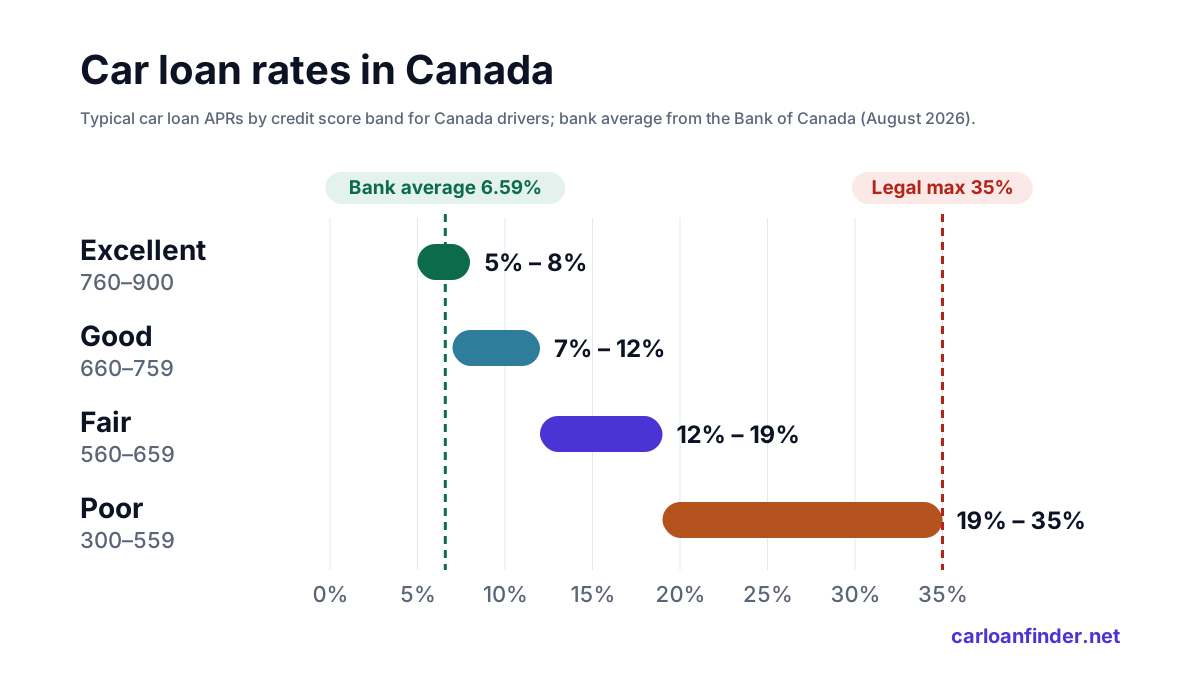
The larger balance also makes your rate matter more. Published estimates by Equifax score band put good credit (660–759) at about 7%–12% and fair credit (560–659) at 12%–19%. On a big truck loan, the difference between those bands adds up quickly, so a few months spent improving your score before buying can pay off more than on a small car.
Match the truck to the job
Start with what the truck will actually do. Write down the heaviest trailer you plan to tow, what you carry in the bed, how many people ride along and how far you drive each week. Those needs point to a cab, bed and engine combination. Anything beyond that is a preference, which is fine, as long as you know you are paying interest on it.
A used truck can stretch your budget further, but trucks often work hard. Ask for the service history, look for signs of heavy towing such as a worn hitch or transmission problems, and have an independent mechanic inspect it before you sign. Lenders also look at age and mileage, and an older, high-mileage truck can be harder to finance at a reasonable rate.
Think about running costs, not only the payment. A larger engine and heavier body usually burn more fuel, tires and brakes cost more, and insurance may be higher. Build those into your monthly budget before you choose a payment level, so the truck still fits when fuel prices or repair bills move.
Work trucks and self-employed buyers
Trucks are often bought for work, and self-employed buyers face an extra step. Without a pay stub to rely on, lenders look for other proof: recent personal tax returns and notices of assessment, business bank statements, and sometimes invoices or contracts that show steady work. Having a couple of years of documents ready makes the conversation much easier.
If the truck is mainly for a registered business, ask whether a business loan or lease makes more sense than a personal car loan. The paperwork and terms differ, and the right choice depends on how your business is set up. An accountant can tell you how the purchase affects your taxes; a lender can only tell you what it will charge.
Be careful with income figures. Self-employed borrowers sometimes show low taxable income after expenses, which can make a loan harder to get. Do not overstate your income on an application to compensate. Instead, consider a larger deposit, a less expensive truck or a co-signer, and apply where lenders are used to working with self-employed borrowers.
Keeping the term under control
Long terms are tempting on a truck because they make a big price look manageable. The catch is that interest builds over every extra month, and you may still owe more than the truck is worth well into the loan. If you trade it early, that negative equity rolls into the next loan. Choose the shortest term whose payment you can comfortably carry.
Use the averages as a benchmark. The Bank of Canada reported an average rate of 6.59% on new auto loans at chartered banks in August 2026, and the Criminal Code caps interest at 35% APR since January 1, 2025. If your offer sits well above the average, ask what would bring it down: a deposit, a different truck or a shorter term.
Before you visit a dealership, you can see which lenders are likely to work with your profile. Car Loan Finder is not a lender; it checks options with a soft inquiry that does not affect your credit score. Walking in with a sense of your rate makes it easier to judge the finance office's offer on the spot.
Provincial differences hit harder on a truck because the price is higher. Sales tax is a percentage of the price, whether your province charges GST with a provincial tax or a single HST, so a pricier pickup carries a bigger tax bill; the Canada Revenue Agency lists each rate. Insurance comes from a public insurer in some provinces and from private companies in others, and a heavier truck can change the premium. In Quebec, winter tires are required from December 1 to March 15, and truck tires cost more to replace.
Questions about this topic
Is it harder to finance a truck than a car?
Lenders use the same criteria for both, but trucks usually cost more, so the loan is larger and the payment higher. That can make it harder to fit the payment within your income. A deposit or a less expensive configuration helps.
Can I finance a truck if I am self-employed?
Yes, it is possible. Expect to provide personal tax returns, notices of assessment and bank statements instead of pay stubs. Applying with complete documents makes the process smoother.
Should I finance the accessories with the truck?
You can, but you will pay interest on them for the full term. Ask for each accessory and add-on to be priced separately, and pay cash for the ones you can.
Is a used truck a good way to lower the loan?
It can be, as long as the truck has been well maintained. Trucks are often used for towing and hauling, so get the service history and an independent inspection before buying.
What rate can I expect on a truck loan with fair credit?
Published estimates by Equifax score band put fair credit (560–659) at about 12%–19%. Your rate also depends on income, deposit, the truck's age and the term you choose.
Does checking my truck loan options affect my credit?
Not with Car Loan Finder. It checks options with a soft inquiry that does not affect your credit score. A hard inquiry only happens when you apply formally with a lender.