The traps behind most complaints
Payment packing is the most common. The dealer quotes a monthly payment that leaves room for extras, then fills that room with an extended service contract, rust protection, tire and rim coverage or credit insurance. Each item may seem small, but it is financed at your loan rate for the full term. Ask for every add-on to be listed with its own price, and remove any you do not want before signing.
Another trap is driving home on financing that is not final. Some dealers let you take the car while they shop your application, then call back days later asking for a bigger down payment or a higher rate. Ask directly whether the financing is approved or conditional. If it is conditional, keep your trade-in until it is confirmed, and get the terms in writing.
Long terms create a quieter problem. Stretching a loan to lower the payment can leave you owing more than the car is worth for years. If you need to sell or trade early, that gap is often rolled into the next loan, which makes the following contract more expensive than the last.
Habits that protect you at the signing table
Take the time to read the full contract, even if the finance office is busy. Compare the vehicle price, trade-in value, down payment, amount financed, APR and term with what you agreed to. If any figure is different, stop and ask. A verbal promise, such as a free first service or a rate review after six months, only counts if it is written into the agreement.
Keep copies of everything: the bill of sale, the credit application, the loan contract and any texts or emails with the salesperson. These records are the backbone of any complaint. Before you sign, it also helps to know what your credit can support. Car Loan Finder is not a lender, but its soft inquiry shows which lenders may work with your file without affecting your credit score.
How to raise a car loan complaint
Start with the dealership. Write to the general manager, not just the salesperson, and explain what happened, what the documents show and what you want: a refund of an add-on, a corrected contract or cancellation of an unwanted product. Keep the tone factual and set a reasonable deadline for a reply. Many disputes end here because dealers want to keep their standing with lenders.
If the dealer does not resolve it, contact the lender that holds your loan. Banks must have an internal complaint process, and if it fails you can take the matter to the external complaints body the bank belongs to. The Financial Consumer Agency of Canada also accepts reports about federally regulated banks. For dealer conduct, such as misrepresentation or a contract that differs from the deal, turn to your province's dealer regulator or consumer protection office.
When the rate itself is the problem
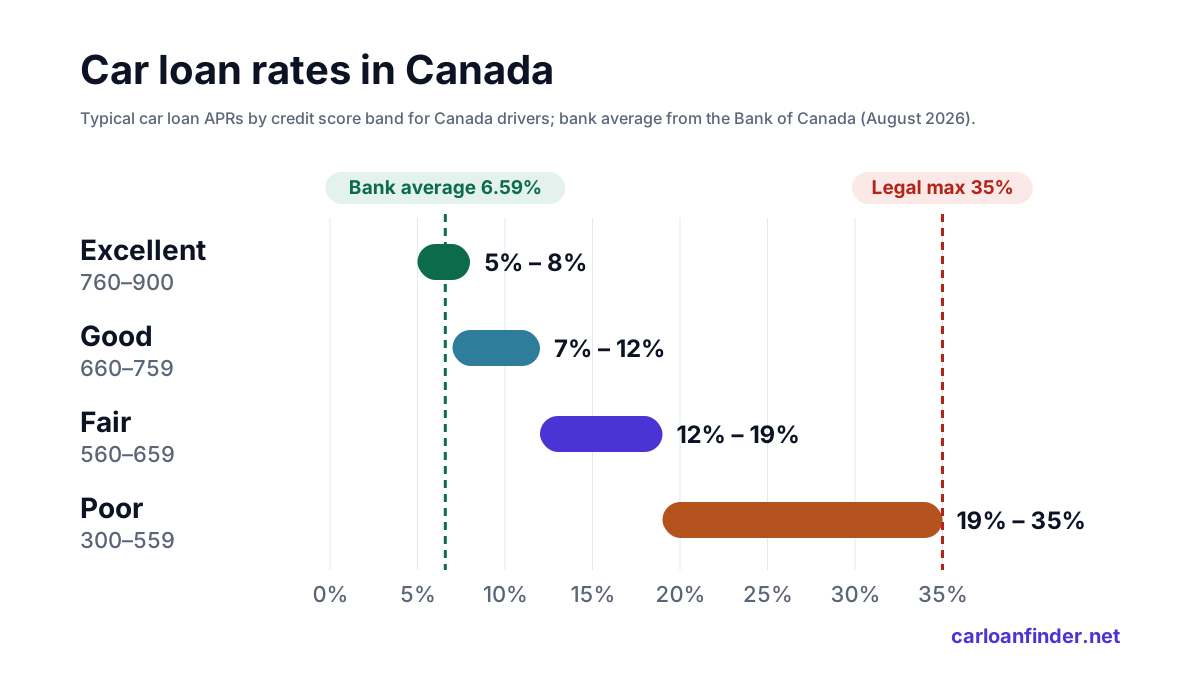
Sometimes the complaint is simply that the loan costs far more than expected. Compare your APR with published references: chartered banks averaged 6.59% on new auto loans in August 2026, and Equifax-band estimates put poor scores (300–559) at 19%–35%. A high rate is not illegal on its own, but it should match your credit profile and be disclosed clearly before you sign.
If your contract shows an APR above 35%, including fees, it exceeds the criminal interest rate set in the Criminal Code since January 1, 2025. Keep the paperwork and raise it with the lender and a regulator right away. For high but legal rates, refinancing after a year of on-time payments is often the practical way out, since most lenders report those payments to the credit bureaus.
Who handles a complaint depends on where you live and who lent the money. Car dealers are licensed and overseen by provincial rules, so the regulator or consumer protection office differs from one province to the next, and Quebec has its own consumer protection framework. Banks are federally regulated, and the Financial Consumer Agency of Canada supervises how they treat customers. Finance companies and credit unions may fall under provincial oversight instead. The Criminal Code rate cap of 35% APR applies across Canada regardless of the lender.
Questions about this topic
Can I cancel an add-on after signing a car loan?
Often yes, though rules and refunds depend on the product and your province. Contact the dealer and the product provider in writing, and ask for the cancellation and any refund to be applied to your loan.
What should I do if the dealer calls back saying my financing fell through?
Ask for the reason in writing and do not agree to new terms on the spot. If the original deal was presented as final, raise it with the dealer manager and, if needed, your province's dealer regulator.
Who regulates car dealers in Canada?
Dealers are regulated provincially, so each province has its own licensing body or consumer protection office. Check your province's consumer affairs website to find the right one.
Where can I complain about a bank car loan?
Start with the bank's internal complaint process. If that does not settle it, go to the external complaints body the bank belongs to, and you can also report the issue to the Financial Consumer Agency of Canada.
Is a very high car loan rate legal in Canada?
A rate at or below 35% APR is legal, though rates near that level are expensive. Since January 1, 2025, the Criminal Code treats any rate above 35% APR as criminal.
How can I avoid car loan problems before I buy?
Know roughly what your credit supports, negotiate the price before talking about financing, and read every figure in the contract. Keep copies of all documents in case you need them later.