Check the car's history before you fall for it
Start with the vehicle identification number, or VIN, which is on the dashboard near the windshield and on the ownership papers. Make sure the numbers match. Use the VIN to order a history report, which can show reported collisions, past registrations in other provinces or countries, and whether the car was ever declared a total loss.
Just as important is a lien search. If the previous owner financed the car and still owes money, the lender may have a claim on it, and that claim can follow the vehicle to you. Dealers should clear any lien before the sale, but in a private sale it is up to you to confirm that the title is free.
Compare what the report says with what the seller tells you. Odometer readings should rise steadily over the years. Service records, if the seller has them, help confirm that the car was maintained. A seller who will not share the VIN or seems vague about the car's past is a reason to slow down.
Get an independent inspection
A test drive tells you how a car feels on a good day. A pre-purchase inspection by a mechanic you choose tells you what is wearing out underneath: brakes, suspension, rust, leaks and warning codes that are not yet showing on the dashboard. It typically costs far less than a single major repair.
Ask the seller to let you take the car to a shop of your choice. A reasonable seller will agree; a refusal is useful information. Do not rely only on an inspection arranged by the seller, and note that a provincial safety certificate, where one exists, checks minimum standards rather than the car's overall condition.
Use the inspection report as a negotiating tool. If the mechanic finds that tires or brakes need replacing soon, you can ask for a lower price or for the work to be done before the sale. If the problems are serious, such as frame damage or major rust, walking away is usually the cheaper choice.
Private seller or dealer: weighing the trade-offs
Private sellers often ask less because they have no overhead, and you can usually talk directly with the person who drove the car. The trade-off is fewer protections. Most private sales are as-is, there is no one to return to if a problem appears next week, and you handle the lien search, the bill of sale and the registration yourself.
Dealers generally charge more, but provinces license and regulate them, and they must disclose certain facts about a vehicle's history. Many offer limited warranties or the option of an extended service contract. Dealers can also arrange financing on the spot, which is convenient, though it is worth comparing their offer with one you arranged yourself.
Whichever route you choose, get everything in writing: the price, the VIN, what is included, and any promises about repairs. Never pay a deposit to a private seller you have not met, for a car you have not seen in person, and be wary of any seller who pushes you to decide on the spot.
Financing a used car
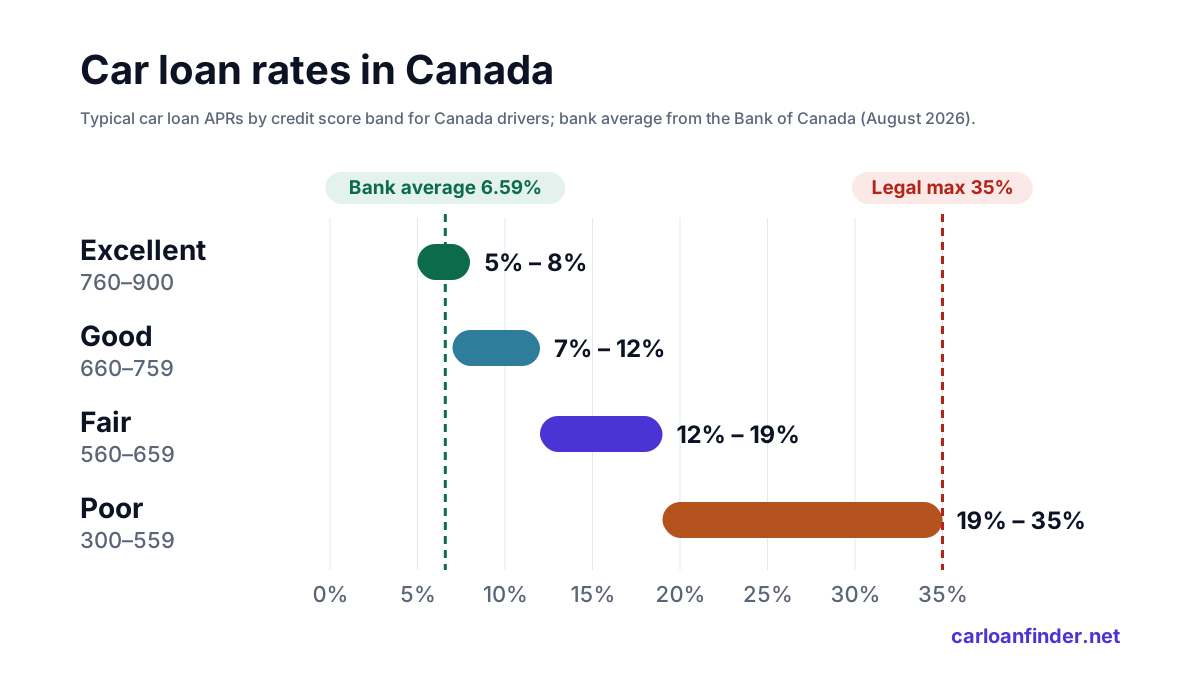
Used-car loans often carry somewhat higher rates for the borrower than new-car loans, and lenders may limit the term on older or high-mileage vehicles. Chartered banks averaged 6.59% on new auto loans in August 2026, according to the Bank of Canada. Equifax estimates 12%–19% for fair credit and 19%–35% for poor credit.
Most lenders finance dealer sales more readily than private ones, because the dealer handles the paperwork and lien checks. If you plan to buy privately, ask your lender in advance whether they finance private sales and what documents they need. Car Loan Finder is not a lender; it checks your options with a soft inquiry that does not affect your credit score.
Match the loan to the car. A long term on an older vehicle can leave you making payments on a car that needs major repairs or is worth less than you owe. A shorter term and a down payment keep you ahead of depreciation and make the next purchase easier.
The rules around a used-car purchase are set provincially, so check yours before you hand over money. Some provinces require a safety inspection before a used vehicle can be registered, and in many, sales tax is due on a private sale when you register the car, not just on dealer sales. The Canada Revenue Agency publishes GST and HST rates by province. In Quebec, a car bought in the fall needs winter tires from Dec 1 to Mar 15, which is worth pricing in.
Questions about this topic
What should I check before buying a used car?
Verify the VIN, order a vehicle history report, run a lien search and book an independent mechanical inspection. Also confirm that the seller's name matches the ownership papers.
How do I know if a used car has a lien on it?
Search the province's personal property registry using the VIN, or order a report that includes lien information. If a lien exists, make sure it is paid off and discharged before you pay.
Is it cheaper to buy a used car privately or from a dealer?
Private sellers often ask less, but you get fewer protections and must handle the paperwork yourself. Dealers usually charge more but are regulated and can arrange financing.
Do I pay sales tax on a private used car sale?
In many provinces, yes, and it is usually collected when you register the car. Check your province's rules before you agree on a price so the tax does not catch you off guard.
Can I get a car loan for a private sale?
Some lenders finance private sales, but not all, and they may ask for a lien search and inspection first. Ask before you commit to a car so the financing does not fall through.
How old can a used car be for a car loan?
Each lender sets its own limits on vehicle age and mileage, and older cars may only qualify for shorter terms. Ask about these limits when you check your options.