
Start months ahead, not days
The best time to look at your credit is well before you need the car. Request your credit reports from both national credit bureaus and read them line by line. Errors such as accounts that are not yours or payments wrongly marked late can be disputed, but corrections take time, so starting a few months ahead gives them a chance to show up.
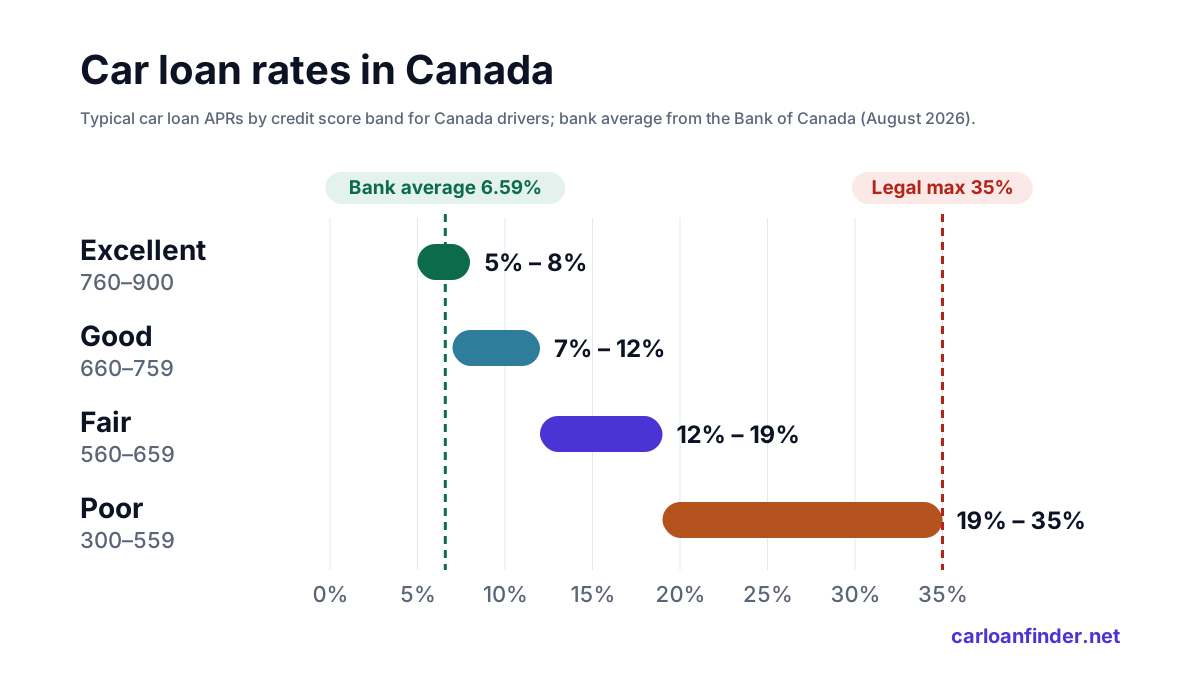
Those months are also useful for small improvements. Paying credit card balances down, keeping every payment on time and avoiding new credit applications can all help your file look stronger. Credit scores in Canada run from 300 to 900, and even a modest move can shift you into a different rate range.
Use the same window to save. A larger down payment reduces the amount you borrow and can make approval easier, especially if your credit is fair or still being built. Setting aside a fixed amount each payday is often more realistic than waiting for a lump sum, and it shows you whether the payment you have in mind is truly affordable.
Choosing the moment to apply
Apply when your documents are in order and you have a clear budget, not when a particular car catches your eye. Checking options with a soft inquiry first lets you see a likely range without affecting your score. Car Loan Finder is not a lender; it uses a soft inquiry for exactly this step.
When you move to full applications, do them close together. Each lender usually runs a hard inquiry, and keeping them within a short period makes it clear you are shopping for one loan rather than taking on several. Spreading them over months can look like repeated attempts to borrow, and each inquiry stays on your report for a while.
Rates move with the wider economy, but trying to time them is rarely worth delaying a purchase you need. In October 2026, the Bank of Canada policy rate was 2.25% and the prime rate was 4.45%. Your own credit profile usually has a bigger effect on the rate you are offered than small changes in those benchmarks.
What decides how long approval takes
There is no standard approval time. It depends on how complete your application is, how easy your income is to verify, and how each lender works. A salaried applicant with recent pay stubs and a clear credit report may hear back sooner than someone whose income comes from several sources.
Common delays include missing or outdated documents, names or addresses that do not match across your ID and credit file, and income that needs extra proof, such as self-employment or commission pay. A lender may also ask questions about a past collection or bankruptcy, and answering quickly keeps the file moving.
Be cautious of anyone who promises approval by a certain hour or day before they have seen your information. A responsible lender has to review your file first. If a dealer pressures you to sign before financing is confirmed, ask for the terms in writing and take the time you need.
After approval: deadlines to watch
An approval is not open forever. Lenders typically set a period during which the offer is valid, and the final terms can depend on the specific car you choose. Ask how long your approval lasts, and whether the rate changes if the car's price, age or mileage differs from what you discussed.
Before signing, line up the pieces that have their own timing: proof of insurance, the down payment in an accessible account and, if you are trading in, the paperwork for your current vehicle. Having these ready means the last step does not become a rush, and you are less likely to agree to an add-on or a longer term just to finish the deal.
Finally, read the contract at your own pace. Check the annual percentage rate, the term and the total cost of borrowing. Since January 1, 2025, the Criminal Code caps loan interest at 35% APR, and an offer near that ceiling is a reason to pause and compare other offers before committing to a multi-year contract.
Some timing questions depend on your province. In Quebec, winter tires are required from Dec 1 to Mar 15 (2026–27 season), so a fall purchase may need a set right away, which affects how much cash you keep aside from the down payment. Sales tax, collected as HST or as GST plus a provincial tax depending on the province, is due at purchase, and insurance must be in place before you drive away, whether it comes from a public or private insurer.
Questions about this topic
How long does it take to get approved for a car loan?
It varies by lender and by how complete your application is. Having your ID, proof of income and proof of address ready usually helps the review move along.
When should I check my credit before buying a car?
A few months before you plan to buy is a good rule. That leaves time to dispute errors on your report and make small improvements before lenders look at it.
Does applying with several lenders hurt my credit?
Each full application usually adds a hard inquiry, which can lower your score slightly. Keeping your applications within a short period limits the impact and shows you are shopping for a single loan.
How long is a car loan pre-approval good for?
Each lender sets its own validity period, so ask when you receive the approval. The final terms can also change depending on the vehicle you choose.
Why is my car loan approval taking so long?
Common causes are missing documents, details that do not match across your ID and credit file, or income that needs extra verification. Ask the lender exactly what they need and send it promptly.
Is there a best time of year to get a car loan?
Your credit, income and down payment matter more than the calendar. Apply when your documents are ready and your budget is clear rather than waiting for a particular month.