Advance-fee loan scams
The most common car loan scam is simple: you are told you have been approved, but before the money is released you must pay an insurance fee, a processing charge or the first few payments. The fee is often requested by e-transfer, gift card, prepaid card or cryptocurrency. Once you pay, the lender disappears, and there was never a loan.
Real lenders take their fees out of the loan or add them to the financed amount, and they show them in the contract. They do not ask for money up front to prove you are serious. If someone insists on payment before funding, stop and verify who they are through contact details you find independently.
Promises are the other signal. Phrases implying that everyone is accepted, or that your credit will not be looked at, are designed to attract people who have been declined elsewhere. A responsible lender has to assess your ability to repay, which means reviewing your income and credit before making an offer.
Scams at the lot and in private sales
Curbsiders are unlicensed dealers who pose as private sellers. They often sell several cars at once from parking lots or online ads, and the vehicles may have hidden collision damage, a rolled-back odometer or an outstanding lien. Ask to see the ownership papers and make sure the name matches the seller's ID.
If the seller always wants to meet somewhere other than their home, cannot explain the car's history or has a different car listed every week under the same phone number, walk away. Run a lien search and get a vehicle history report using the VIN before any money changes hands.
Licensed dealers can also cross the line. Watch for spot delivery, where you drive home a car and are later told the financing fell through and must be redone at a higher rate. Do not leave your trade-in or sign final papers until the financing is confirmed in writing by the lender.
Payment packing and rates that break the law
Payment packing means quoting you a monthly payment that quietly includes products you did not ask for, such as an extended service contract, rust protection or credit insurance. Because you focus on the payment, the extras can slip through. Ask for an itemized list of everything in the amount financed and decline what you do not want.
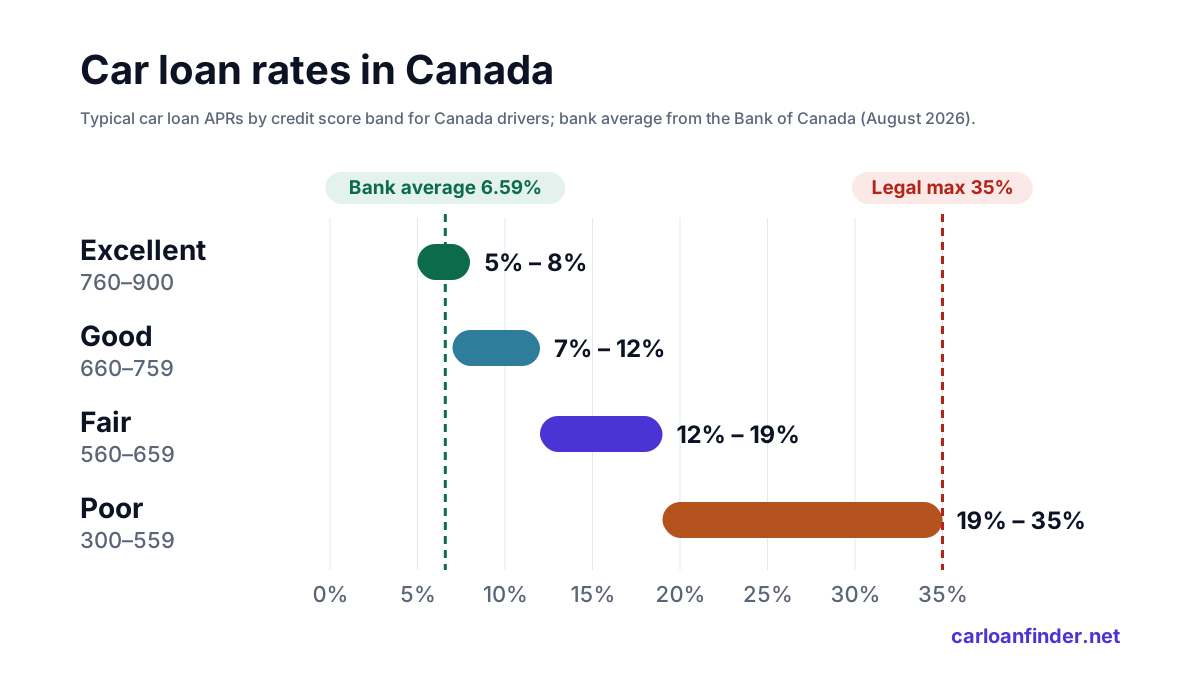
Compare the rate offered with published figures. Chartered banks averaged 6.59% on new auto loans in August 2026, according to the Bank of Canada, and Equifax estimates 19%–35% for poor credit. A rate above 35% APR is beyond the criminal rate limit, and a lender charging it is breaking the law.
Read the whole contract before signing, including the cost of borrowing and any fees. Blank spaces, numbers that differ from what you were told, or pressure to sign immediately are all reasons to take the papers home or ask someone you trust to review them. A legitimate seller will let you take that time.
If you think you have been targeted
Stop paying and stop sharing personal information with the seller or lender. If you sent money, contact your bank or card provider right away; some payments can be stopped or disputed if you act quickly. Keep every email, text, receipt, contract and ad, since these records help with any complaint, chargeback or police investigation.
If you gave out your social insurance number, banking details or ID, contact both national credit bureaus to ask about adding a fraud alert to your file, and watch your credit reports for accounts you did not open. Report the scam to your local police and, for a dealer, to your province's dealer regulator or consumer protection office.
To lower the risk next time, check your options through a source that explains how it works. Car Loan Finder is not a lender and never charges an upfront fee to show you options; it uses a soft inquiry that does not affect your credit score, and it explains each step before you share anything.
Consumer protection on car purchases is largely provincial. Each province regulates and licenses car dealers in its own way, and several have a dealer regulator or a consumer protection office that handles complaints and can confirm whether a business is licensed. Federally, the Financial Consumer Agency of Canada publishes guidance on financing a car. Before you deal with a seller, check that they are licensed in your province, and keep copies of every document and message in case you need to file a complaint.
Questions about this topic
Is it a scam if a lender asks for a fee before giving me a car loan?
It is a major warning sign. Legitimate lenders include fees in the contract or the financed amount and do not ask you to pay up front, especially by gift card, e-transfer or cryptocurrency.
What is a curbsider?
A curbsider is an unlicensed dealer posing as a private seller. Their cars may have hidden damage, rolled-back odometers or unpaid liens, and you have fewer protections if something goes wrong.
How can I check if a car dealer is legitimate?
Confirm the dealer is licensed with your province's regulator or consumer protection office. Also check that the business name on the contract matches the one you are dealing with.
What is the maximum legal interest rate on a car loan in Canada?
Since January 1, 2025, the Criminal Code sets the criminal interest rate at 35% APR. A loan above that rate is illegal.
What should I do if I was scammed on a car loan?
Contact your bank immediately to try to stop or dispute any payment, and keep all records. Report it to police and, if a dealer was involved, to your provincial regulator.
Are online car loan offers with approval for bad credit real?
Some lenders do work with bad credit, but none can promise approval before reviewing your file. Be wary of offers that skip the credit review or ask for money before you receive the loan.