
The most common reasons a lender says no
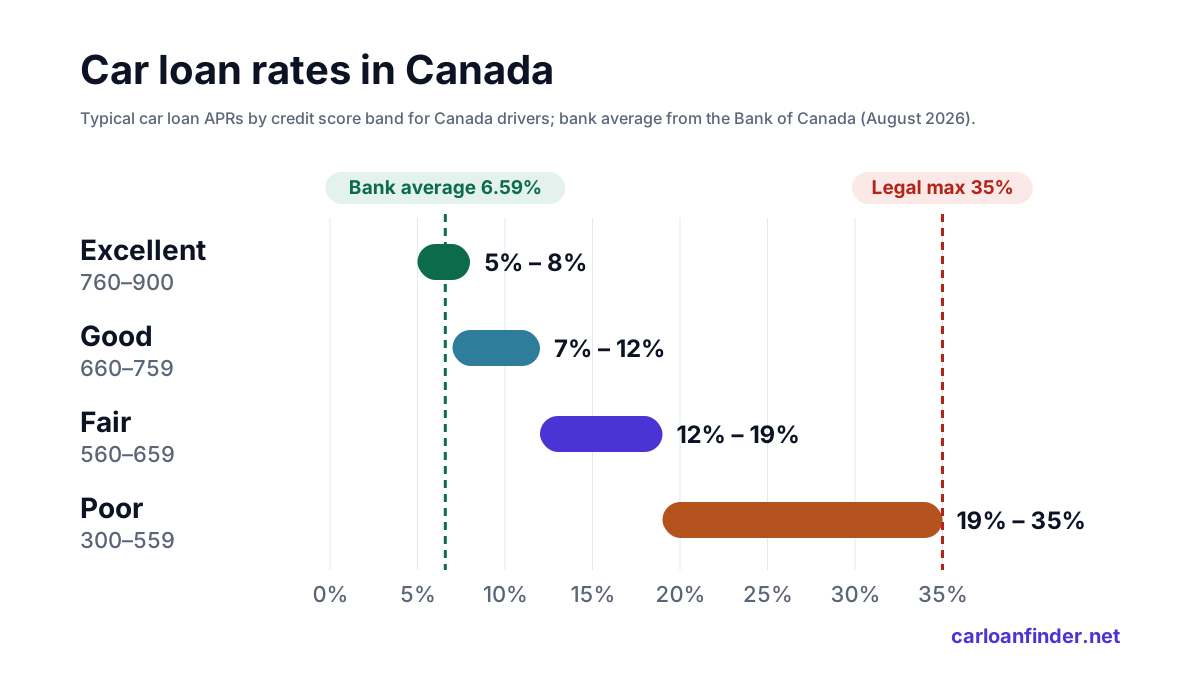
Credit score is the first filter. Scores in Canada run from 300 to 900, and each lender sets a minimum for its loan programs. Below that line, a file may never reach a person. Published estimates by Equifax score band put the Poor band (300–559) at 19%–35%, and some lenders would rather decline than price a loan near the top of that range.
Debt load matters as much as the score. Lenders compare your monthly obligations, including rent or mortgage, card minimums and other loans, with your income. If the new car payment would push that total too high, the answer is no even with a fair score. A credit card close to its limit counts against you twice: it raises your payments and pulls the score down.
Other triggers are recent events: a payment missed in the last few months, an account sent to collections, a consumer proposal or bankruptcy that is not yet discharged, or a job that started very recently. A thin file, with few accounts or a short history, can also end in a decline because the lender has too little to judge, not because anything went wrong.
Finding out which reason applied to you
Start by asking. The lender or dealer that declined you can often say whether the issue was the score, income, existing debt or the vehicle, and which credit bureau supplied the report. Write the answer down. It tells you where to spend your effort and saves you from guessing, or from fixing something that was never the problem. If a dealer sent your file to several lenders, ask which ones replied and what each said.
Then get your own credit reports. The Financial Consumer Agency of Canada explains how to request a free copy from each national credit bureau and how to read it. Go through every account: balances, payment history, accounts you do not recognise and old debts that should have dropped off. Mistakes do happen, and one wrongly reported late payment can be enough to tip a decision.
Finally, look at the application itself. Did the income you entered match your pay stubs or tax returns? Did you ask to finance a vehicle priced well above what your income supports, or choose a term the lender does not offer on an older car? A gap between the request and the paperwork is one of the easiest problems to correct.
What to fix before you reapply
Correct errors first, because that costs nothing. File a dispute with the bureau that shows the mistake and keep copies of anything that supports your side. Next, bring every account current. A lender reading your file pays close attention to the most recent months, and a balance that is overdue today weighs more than a problem from years ago.
Lower your card balances where you can. Paying a card well below its limit can help the score and reduces the monthly payments a lender counts against your income. Avoid opening new credit or applying at several lenders in the same week: each hard inquiry shows on your report, and a cluster of them can make you look like a borrower under pressure.
Then reset the request. Gather recent pay stubs or, if you are self-employed, your notices of assessment, and choose a vehicle and term that keep the payment comfortable. A shorter term on a less expensive car often reads better to a lender than a long term on a pricier one, and it costs less interest over the life of the loan.
Timing your next application
There is no fixed waiting period, but reapplying the next day with the same file usually brings the same answer. Give your changes time to appear: a paid-down balance or a corrected entry may take a reporting cycle or two to show. Use that time to save toward a down payment, which lowers the amount you need to borrow and the risk the lender carries.
When you are ready, check where you stand before a lender pulls your file. Car Loan Finder is not a lender; it checks your options with a soft inquiry that does not affect your credit score, so you can see which lenders may consider your profile before any hard inquiry is made. Then compare the offers you receive on APR and total cost, not only on the monthly payment.
The reasons for a decline are the same across Canada, but the cost of the car you reapply for is not. Sales tax depends on the province: some charge only GST or HST, while others add a provincial sales tax, and that tax is often folded into the amount financed. A few provinces run public auto insurance while the rest rely on private insurers, which changes the monthly budget a lender weighs. In Quebec, winter tires are required from December 1 to March 15, one more cost to plan for before you apply again.
Questions about this topic
Why was I declined for a car loan when I have a steady job?
Income alone is not enough if your existing payments already take a large share of it, or if the lender could not verify it. A recent missed payment or a score below the lender's cut-off can also outweigh a steady job.
Does a declined car loan application hurt my credit score?
The decline itself is not reported, but the hard inquiry the lender made is recorded on your credit report. Several hard inquiries in a short period can lower your score, so avoid sending many applications at once.
How long should I wait before reapplying for a car loan?
There is no fixed rule, but wait until the changes you made show on your credit report, which can take a reporting cycle or two. Reapplying with the same file usually brings the same result.
Can I find out exactly why a lender turned me down?
Ask the lender or dealer directly; many will say whether the issue was credit, income, debt or the vehicle. Pull your own reports from the credit bureaus as well, so you can check the information the decision was based on.
What credit score do I need for a car loan in Canada?
There is no single minimum, because each lender sets its own cut-offs on a scale of 300 to 900. Published estimates by Equifax score band put rates at 12%–19% for the Fair band (560–659) and 19%–35% for the Poor band (300–559).
Will a down payment or co-signer fix a declined application?
Either can help, because a down payment lowers the amount borrowed and a co-signer adds a second income and credit history. Neither repairs the underlying problem, so fix errors and overdue accounts as well.